We may earn money or products from the companies mentioned in this post.
Quick answer: “OEM” and “aftermarket” do not tell the whole story about a suspension part. The right replacement depends on your vehicle’s exact suspension package and whether you want to restore its original ride or change how it drives. Verify the part against the VIN, trim, drivetrain, and factory suspension equipment before ordering.
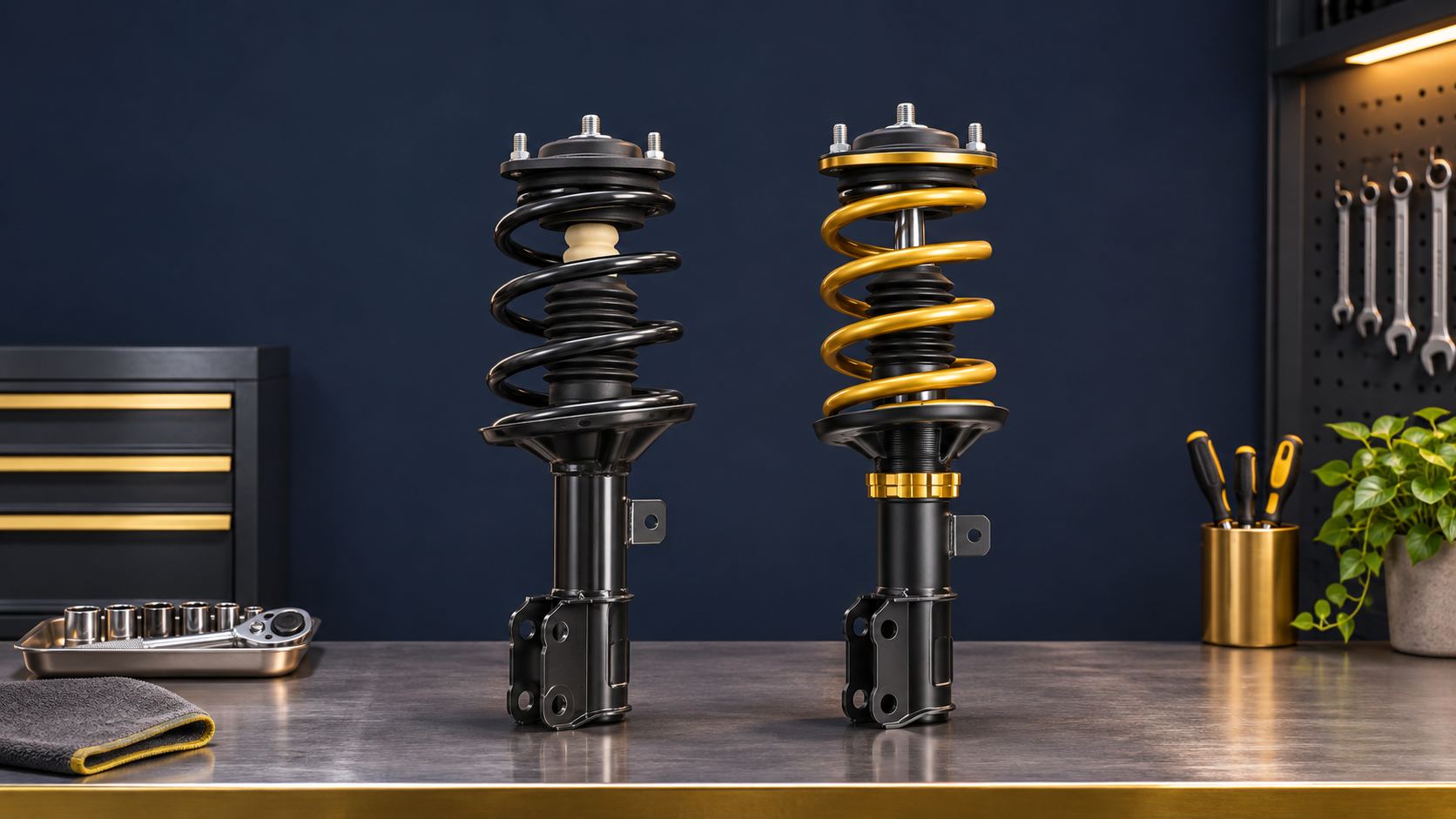
OEM, genuine, and aftermarket: what do the terms mean?
“Genuine” or “OE” usually describes a part sold through the vehicle maker’s parts channel as the original replacement. “Aftermarket” describes a replacement made or sold by an independent supplier. Some aftermarket parts are designed to match original equipment specifications; others are intended to change ride height, stiffness, load capacity, or handling. Sellers do not always use these terms consistently, so check the actual part description and application notes.
For a broader overview of these labels, see our guide to OEM and aftermarket auto parts.
Quick comparison
| What to compare | Genuine OE replacement | Aftermarket replacement |
|---|---|---|
| Fitment | Intended for the factory application shown in the vehicle maker’s catalog. | May be a direct-fit replacement, a different-spec option, or a modification part. Confirm the exact application. |
| Ride and handling | Often the clearest route when your goal is to restore the original configuration. | Options vary. Some aim for an OE-like ride; others are tuned for a different response or ride height. |
| Vehicle configuration | Still requires the correct part number for the vehicle’s package and build. | May require extra checks for trim, drivetrain, suspension codes, or existing modifications. |
| Price and coverage | Compare the part price, availability, and warranty terms for the exact item. | Compare the same details, plus return rules and any installation requirements. |
These are starting points, not guarantees: the part’s specifications and your vehicle’s configuration matter more than the label.
Fitment is the first decision
Suspension fitment can vary within the same model year. For example, a vehicle may have multiple factory suspension packages, electronic controls, self-leveling components, or different spring and shock combinations. A part that fits one version may not fit another.
- Use the VIN or the manufacturer’s official parts lookup when available.
- Confirm year, make, model, engine, drivetrain, trim, and any suspension package or option code requested by the catalog.
- Tell the parts supplier about lift or leveling kits, conversion work, or other suspension changes already on the vehicle.
- Compare the listed part number and installation notes with the service information for your exact vehicle.
GM’s parts guidance recommends using the VIN or vehicle details and adding further information to confirm fitment. Monroe also notes that a single GM model year can include multiple original suspension packages, which can affect replacement-shock selection.
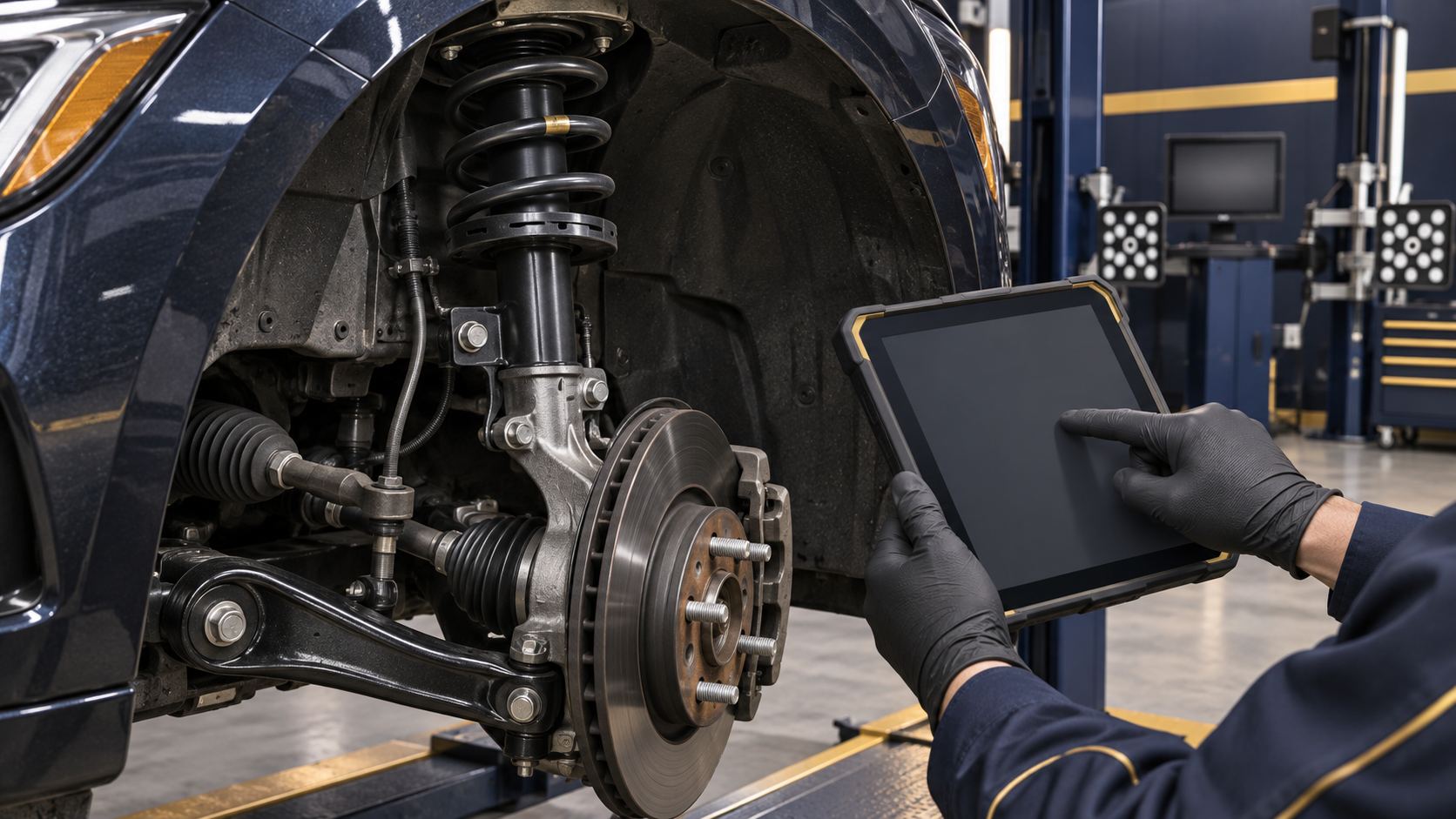
How the part can affect ride
If your goal is to return a vehicle to its original ride height and feel, look for a replacement specified for that exact application and factory package. Aftermarket suspension parts can also offer application-specific alternatives, but the ride may differ when the part is designed for towing, heavier loads, sport handling, off-road use, or a different ride height.
Do not assume a stiffer spring, taller shock, or lift component will work as a simple one-for-one replacement. Suspension components work together, and a modification can affect alignment, travel, tire clearance, or the operation of electronic and self-leveling systems. Follow the part maker’s fitment and installation instructions and use a qualified technician when the work involves compressed springs or unfamiliar systems.
If you are still deciding whether your suspension needs attention, read our guide to signs your suspension system may need an upgrade.
Check the warranty and return terms
Before buying, review the part warranty, labor coverage, return window, and any conditions about vehicle modifications or professional installation. Keep the receipt and repair documentation. The Federal Trade Commission says a vehicle warranty does not automatically end because aftermarket or recycled parts are used. However, warranty coverage for a damaged component may be affected if a defective part or improper installation caused the damage. Read your specific warranty and ask the provider about the repair in writing if you are unsure.
Questions to ask before you order
- Does this part match my VIN and factory suspension package?
- Is it intended to restore factory ride height, or does it change ride or handling?
- Will it work with my vehicle’s electronic, air, or self-leveling suspension?
- Does my existing lift, leveling kit, or other modification change the fitment?
- What are the part warranty, labor coverage, and return conditions?
- Does the installation require a spring compressor, calibration, or alignment check?
The takeaway
Choose by verified fitment and intended ride, not by the OEM or aftermarket label alone. If restoring the original setup is your priority, match the exact factory application. If you are considering an aftermarket upgrade, confirm the complete system compatibility and understand how the change may affect ride height, handling, alignment, and warranty coverage.
Sources
- GM Support: Parts fitment and installation guidance
- Monroe: Selecting replacement shocks for GM trucks and SUVs
- Monroe: Shock and strut installation tips
- Federal Trade Commission: Auto warranties and auto service contracts
General information only. Suspension systems vary by vehicle and configuration. Use vehicle-specific service information and consult a qualified technician when fitment or installation is uncertain.